14 min read · 1 June 2026
Investing in Dubai in 2026: the complete guide for foreign investors
Market, taxation, Golden Visa, neighbourhoods, payment plans, yields: everything a foreign investor needs to understand before buying in Dubai in 2026.
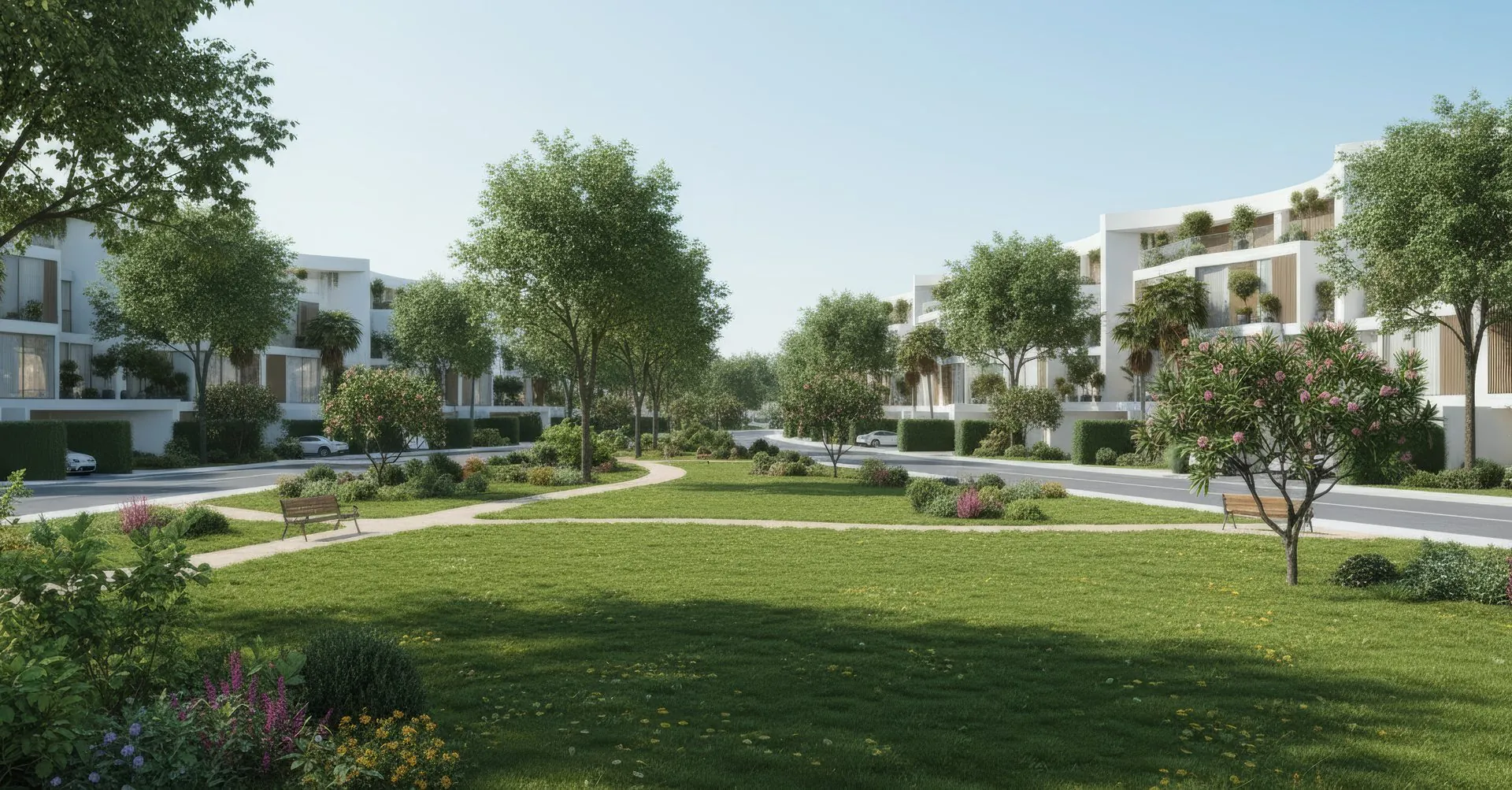
In less than a decade Dubai has become one of the five most liquid real-estate markets on the planet. A unique concentration of capital, near-zero taxation, and a legal framework that has reassured even the most cautious family offices. This guide distils everything a foreign investor needs to understand before positioning themselves in 2026.
1. Why Dubai is attracting capital in 2026
Dubai's real-estate market has recorded five consecutive years of growth since the post-Covid reopening. According to the Dubai Land Department, transaction volume exceeded AED 760 billion in 2024 — almost triple the 2019 level. Three drivers explain the acceleration: the Golden Visa reform, a major inflow of tech and family-office capital from Europe and India, and the maturation of the branded residences segment.
For a foreign investor, Dubai offers a rare combination: no income tax or capital-gains tax, full freehold ownership for non-residents, payment plans spread until handover, and continuous rental demand fuelled by the 88% expatriate share of the 3.7-million population.
2. Reading the 2026 cycle
Our conviction for 2026 is clear: we are entering a phase of strong differentiation. The ultra-prime market (Palm Jumeirah, Jumeirah Bay, Emirates Hills, District One) keeps appreciating on land scarcity; the mid-market (AED 1.5–5M) is normalising after a 30% two-year run; off-plan new builds offer the best price / cash-on-cash ratios thanks to payment plans.
3. Buying as a non-resident
You do not need UAE residency to buy in Dubai. Freehold ownership is open to all foreign nationals in designated zones (Palm Jumeirah, Downtown, Marina, Business Bay, JLT, Dubai Hills, Emaar Beachfront, etc.). Cash transactions close in 30–45 days on average, financed ones in 60–90 days.
- Passport and ID document
- Down payment between 10 and 20% depending on the project
- Booking Form (reservation contract)
- Title transfer at the DLD (Dubai Land Department) after payment of the 4% fee
- Final title deed at handover or at the end of the payment plan
We walk through the full acquisition journey for a non-resident — required documents, UAE bank financing, escrow, RERA — in our dedicated guide.
The Penthouse signature project
Lunaya by ZAYA × FIVE
Lunaya by ZAYA × FIVE — signature villas in Jebel Ali, from AED 5.22M, handover Q2 2029.
Discover →4. Taxation: what investors actually pay
Dubai levies no income tax, no capital-gains tax, and no inheritance tax. That is accurate. However, recurring fees materially impact net returns: DLD fee (4%), agency fees (~2%, applicable only on the secondary market — off-plan, the agency is paid by the developer), administrative costs, annual service charges (AED 12–35 per sqft depending on the programme), and 5% VAT on certain associated services.
For a French investor, the France–UAE tax treaty avoids double taxation on rental income and capital gains. Transparency remains total: any income must be reported in France, but tax paid in the UAE (none in this case) gives rise to a tax credit.
5. Choosing the right neighbourhood
Neighbourhood choice trumps everything else. Dubai is not a monolithic market: from Palm Jumeirah (AED 15,000–35,000 per sqft on the fronds) to Jumeirah Village Circle (AED 1,100–1,600 per sqft), there is a 15× factor. Our 2026 value-pocket map identifies five opportunity zones:
- 01Jebel Ali — the new south-west frontier, lifted by Expo City and the 2030 masterplans
- 02Dubai Islands — waterfront reshaped by Nakheel, 2026-28 handovers, contained land premium
- 03Sheikh Zayed Road / Jumeirah Garden City — the central spine, branded residences five minutes from the DIFC
- 04Dubai Maritime City — mature offshore living, panoramic views and solid rental yields
- 05Palm Jumeirah Fronds G & N — the ultra-prime, land scarcity, low rotation, patrimonial appreciation
6. Off-plan vs secondary market
Off-plan remains the most powerful lever for a first-time Dubai investor. With a 10–20% initial deposit and the balance spread until handover (sometimes post-handover over 24–36 months), the investor captures the full appreciation during construction without committing all the capital. Across signature 2024–2026 programmes, we observe an 18–35% average pre-handover uplift.
The secondary market, by contrast, offers immediate rental income and opportunistic discounts on assets handed over 5 to 10 years ago, whose sellers are sometimes time-constrained. Net yields observed on secondary (4.5 to 7.5%) exceed those of branded new builds (3.5 to 5.5%) but with less capital-gain optionality.
7. How much do you really need to invest?
The Dubai entry ticket now starts around AED 650,000 (~€165,000) for a studio off-plan in an emerging neighbourhood. The Golden Visa investor threshold is set at AED 2 million (~€500,000). To access the delivered ultra-prime segment, plan from AED 12 million (~€3M) for a penthouse, AED 30–80M for a Palm Jumeirah villa, AED 80–250M for an Emirates Hills mansion.
8. The mistakes we see most often
- 01Buying off-plan from a developer without a verified delivery track record
- 02Under-estimating service charges, which can reach 15% of annual rent
- 03Ignoring the post-handover rhythm: ~35% of the price due after delivery on average
- 04Picking a location for the view alone, without studying the neighbouring construction pipeline
- 05Handing rental management to a non-specialist agency: 20–30% of yield lost
9. The Penthouse method
We structure every acquisition around three principles: discretion, curation, continuity. Concretely, that means presenting a limited number of opportunities filtered on location / asset / payment-plan coherence; accompanying each file from the first viewing to handover and beyond (management, resale, asset structuring); and working exclusively with a small circle of developers and family offices.
Frequently asked questions
Do I need to be a resident to buy in Dubai?
No. Any foreigner can buy in full freehold within designated zones, with no visa and no permanent physical presence required. UAE residency can be obtained subsequently through the investor Golden Visa with AED 2 million invested.
What are the real fees on top of the purchase price?
Plan around 5 to 7% in acquisition costs depending on the purchase type: 4% DLD fee (always due), 2% agency fee (secondary market only — off-plan, the agency is paid by the developer), 0.25% registration trustee, around 0.5% administrative and NOC costs. Add AED 12–35 per sqft of annual service charges.
What rental yield can I expect in 2026?
Net yields range from 4.5 to 8% depending on neighbourhood and asset type. Studios and 1-bedrooms in JVC, Business Bay, Dubai South deliver 6–8%. Palm Jumeirah and Emirates Hills villas yield below 4% but are driven by appreciation.
Can I finance an acquisition with a UAE bank loan?
Yes. UAE banks finance up to 50% of value for a non-resident, 75–80% for a resident. 2025 rates range from 4.5 to 6.5% depending on the profile. Our team introduces you to the relevant banks.
Signed
Abir Nakad
Director — The Penthouse
Read next
Our market reading continues
Taxation & legal framework · 11 min read
Buying in Dubai as a non-resident: a step-by-step guide
What you need to know, in the right order, to close a Dubai acquisition from abroad — documents, escrow, NOC, DLD, financing and realistic timelines.
Taxation & legal framework · 9 min read
Dubai Golden Visa for real-estate investors: the complete 2026 guide
The Golden Visa is now granted from AED 2M invested in real estate. Here is the full procedure, the pitfalls to avoid, and the rights actually attached to this 10-year residency.
Taxation & legal framework · 10 min read
Dubai real-estate taxation in 2026: 0% tax, but what are the real costs?
No income tax, no capital-gains tax, no inheritance tax. But six expense lines every serious business plan must factor in.