13 min read · 14 June 2026
Relocating to Dubai in 2026: the complete guide for French nationals
Visas, tax exit, banking, French schools, driving licence, Emirates ID, community: the complete up-to-date dossier to prepare your relocation to Dubai from France.
The French community in Dubai now exceeds 25,000, with arrival flows tripling since 2022. The France → UAE move nonetheless remains one of the most technical relocation files: four visa routes, a French tax-residency exit to orchestrate, a local banking system to unlock, two French schools to arbitrate. Here is the playbook — no jargon — to arrive with the right documents at the right time.
1. Choosing your visa: the four residency routes
A French national can only reside in the UAE with a long-stay visa. Four main categories exist, each with its own timing and cost.
Employment Visa — 2 to 3 years
The most common: your UAE employer sponsors the visa. It covers the contract-holder and then allows sponsoring spouse and children. Cost: AED 3,000 to 5,000, borne by the employer. Renewable with each contract renewal. The visa expires automatically 30 days after contract end — plan ahead if you switch employers.
Real-estate investor Golden Visa — 10 years
10-year renewable residency, obtained by holding one or more properties totalling at least AED 2M (≈ €500,000), across any districts. No employment or company required. You sponsor spouse and children without limit. Government cost: ≈ AED 4,000 to 6,000, excluding PRO handling. Popular with retirees and rentiers.
Free-Zone company setup visa — 2 to 3 years
Setting up in a Free Zone (IFZA, Meydan Free Zone, DMCC, DIFC) grants you a residency visa tied to your trade licence. Structure cost: AED 12,000 to 35,000 / year depending on zone and activity, visa included. Ideal for freelancers, consultants, digital entrepreneurs — but requires bookkeeping and annual licence renewal.
Freelancer / Green Visa — 5 years
Introduced in 2022, it allows qualified independents (creative, tech, consulting) to reside 5 years without a sponsor. Requires ≥ AED 15,000 monthly income and a bachelor's + 5 years of experience. Government fees ≈ AED 3,000. Less flexible than Free Zone but cheaper long term.
2. Exiting the French tax household — the concrete mechanics
Becoming a UAE tax resident is neither automatic nor instant. The French tax authority checks four successive criteria to determine residency — you must exit all four.
- 01Home and main place of stay: including the residence where your spouse and children live. Solution: the family household relocates with you, or is let to a third party with a Cerfa lease.
- 02Main professional activity: your income must originate primarily abroad. Solution: an active UAE employment contract or Free-Zone trade licence.
- 03Centre of economic interests: assets, bank accounts, holdings. Solution: open a primary UAE account, deposit your salaries there, hold your movable assets there.
- 04Stay of ≥ 183 days / year in the UAE: documented by the UAE Tax Residency Certificate (TRC) — issued by the FTA (Federal Tax Authority) after one year of presence.
Concretely: within 60 days of arrival, send your French tax office your new UAE address + a copy of your residency visa, using form 2042. You will be taxed in France for the departure year on a pro-rata basis until the date of residency transfer. From year N+1, filing happens via the dedicated "Non-Resident" section on impots.gouv.fr, and you are taxable in France only on French-source income (rental income, capital gains on French property, dividends from French companies).
3. Opening your bank accounts: the sequence that works
No local bank opens a resident account without an Emirates ID. The sequence that works for all our clients:
- 01Before departure: open a non-resident account at Mashreq Neo NR or Emirates NBD Non-Resident (100% online, video KYC, initial deposit ≥ AED 25,000). Used to receive your first salary.
- 02Week 1 in the UAE: biometrics + resident visa issued → Emirates ID within 5 to 10 days.
- 03Week 2-3: upgrade to a resident account at the same bank (no transfer needed). You get chequebook, debit card and HSBC Global / Emirates NBD wire access.
- 04Month 3-6: open a second account at HSBC UAE Premier or Standard Chartered Priority for diversification (useful for mortgages).
France side: do not close your main account before declaring residency change — the account automatically becomes "non-resident" and still receives dividends, rents and French flows. Notifying your bank avoids the account being frozen at residency declaration time.
4. Housing: neighbourhoods favoured by French families
The geography of Dubai's French community organises around the two French schools. The 15-20 minute school-run radius drives neighbourhood selection.
- Around Lycée Français International (LFI) in Al Barsha: Al Sufouh, JLT, Emirates Hills, The Meadows, Al Furjan. Family rhythm, greenery, established French community.
- Around Lycée Français Georges Pompidou (LFGP) in Oud Metha: Downtown, Business Bay, Al Wasl, Jumeirah 1-2-3, City Walk. Urban living, close to DIFC and restaurants.
- Compromise for dual-career couples: Dubai Marina, JBR (close to LFI), Business Bay (close to LFGP) — 2-3BR apartments with private school buses.
5. Schooling: LFI or LFGP?
Both schools are French Ministry-accredited under AEFE (French Education Abroad Agency) convention. Curricula and diplomas are identical and equally recognised. The real differences lie on three axes:
- Location: LFI in Al Barsha (Marina side), LFGP in Oud Metha (Downtown side). Choose your neighbourhood first.
- Capacity: LFI (≈ 3,500 students) is larger than LFGP (≈ 2,800), but waiting lists on CP and 6ème are heavy at both. Submit the file ≥ 12 months in advance.
- 2026 annual fees: LFI AED 34,000 to 65,000 depending on grade, LFGP AED 32,000 to 62,000, excluding transport (≈ AED 6,500 / year) and canteen (≈ AED 8,000 / year).
English-language alternative if you want to keep the international door open: GEMS Wellington International, Dubai College, Repton School — British curriculum (IGCSE + A-Levels) or IB, comparable budget (AED 60,000 to 90,000 / year).
6. Health insurance — mandatory, and worth picking carefully
Health insurance is legally mandatory for every UAE resident. Two options:
- Local plan (Daman, Oman Insurance, MetLife UAE): AED 3,000 to 12,000 / year / adult depending on coverage. Care in local private clinics and hospitals (Mediclinic, King's, American Hospital).
- International plan (Cigna Global, Allianz Care, April International): AED 6,000 to 20,000 / year / adult, but worldwide cover — valuable if you return to France several times a year or for specialised treatment.
- Complement with CFE (Caisse des Français à l'Étranger): €500 to €1,800 / year / adult based on income. Maintains a link with French social security, useful for reimbursements during trips back to France.
7. Driving licence: same-day conversion
The French Category B licence converts to a UAE licence with no re-test, once your Emirates ID is issued. Process at the RTA (Roads and Transport Authority): eye test, photo, flat AED 870 fee. Same-day issuance. Bring an official translation of your French licence (approved typing centre, ≈ AED 150). Your French licence stays valid in parallel — you can drive during trips back to France.
8. Rebuilding community: the anchor points
- UFE Dubai (Union of French Expats Abroad): monthly events, WhatsApp groups by neighbourhood, newcomer welcome. Membership ≈ AED 200 / year.
- French Consulate General in Dubai (One Central, DWTC): registration on the Registre des Français établis hors de France (free, mandatory to vote and to enrol in CFE).
- Business France Dubai: support for French entrepreneurs setting up locally.
- French Chamber of Commerce and Industry in the UAE (CCIFE UAE): professional network, events, alumni base to tap for local hiring.
- Well-run "Français à Dubaï" Facebook & Slack groups: handy for furniture, quick resale and restaurant recommendations.
9. What will surprise you in the first six months
The school calendar follows a local rhythm (end-of-August start, long break around Ramadan and Eid, June end) but French holidays remain observed and Europe trips organise smoothly. Summer (June-September) forces indoor air-conditioned living — beaches usable only in early morning. Friday is no longer a public holiday since 2022, the week now aligns with the Western Monday-Friday. Ramadan (variable, ≈ March-April) slows public hours but does not restrict eating or drinking at home or in hotels. Alcohol is sold freely at restaurants and at home for residents holding a free MMI or African + Eastern licence.
Frequently asked questions
How long does full relocation take?
Six months is realistic: 2 months of France-side preparation (non-resident account, school choice, housing booking), 1 month to get residency visa and Emirates ID, 3 months to complete admin registrations (CFE, consulate, driving licence, health insurance) and file the French tax exit.
Can I keep a secondary residence in France?
Yes, without impact on tax residency, provided it does not become your main home (neither spouse nor children living there permanently). Fiscally, it remains subject to property tax and possibly the secondary-residence occupancy tax.
Is my French rental income still taxed?
Yes. French-source rental income remains taxable in France at a minimum 20% rate (up to €45,000 net income) or 30% above, plus 17.2% social contributions (or only 7.5% PSOL if you fall under a European health-insurance scheme). The France-UAE treaty does not exempt this income.
Does the Golden Visa lead to a UAE passport?
No. UAE citizenship is never granted by naturalisation to foreigners — the Golden Visa remains an indefinitely renewable residence permit. You retain your French citizenship with no choice to make.
Is shipping furniture from France worthwhile?
Rarely worthwhile below 40 m³. Movers (Crown Relocations, AGS Movers, Interdean) charge €6,000 to €12,000 for a 3-bedroom via sea container, with 6 to 10 weeks lead time. Except for art or heirloom furniture, it is often cheaper and faster to buy locally (Casa Milano, West Elm, Marina Home, IKEA Dubai).
Relocating to Dubai is not just another move: it is an administrative and fiscal shift that, badly prepared, costs dearly — and well prepared, opens a decade of zero personal income tax. The Penthouse assists French families through this transition every month, from visa choice to first school lease. If you are planning a 2026 or 2027 departure, a first exchange lets us frame your timeline, budget and priorities.
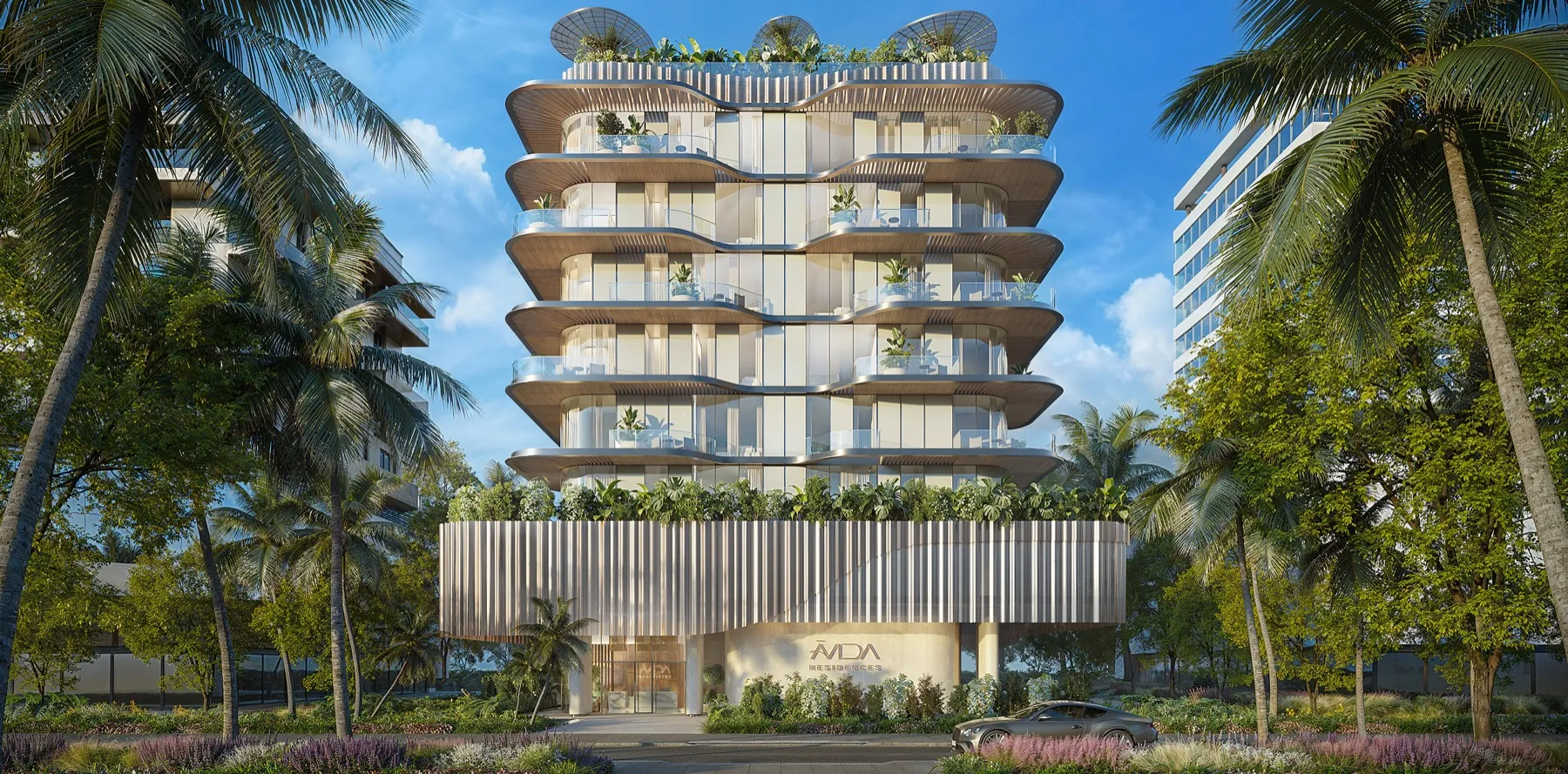
Featured programme — wellness & longevity
Avida Residences · Dubai Islands
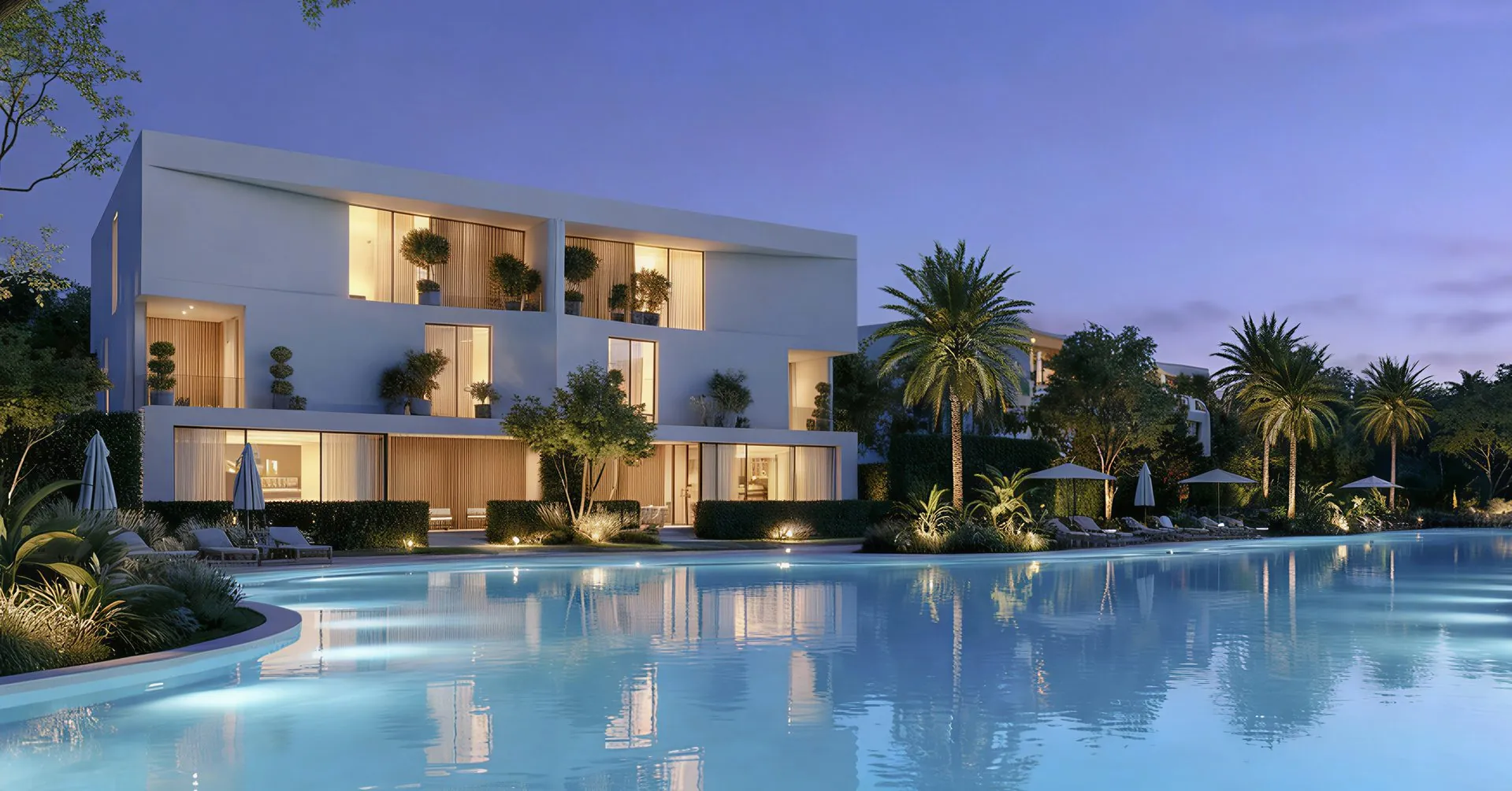
On Dubai Islands, 12 min from Downtown, a residential frame designed around health, rhythm and daily ritual — often chosen by French families looking to combine active life and a peaceful family setting.
Discover →Signed
Abir Nakad
Director — The Penthouse
Read next
Our market reading continues
Lifestyle · 12 min read
Living in Dubai with family: best neighbourhoods, international schools, education climate
Dubai Hills or Jumeirah? French lycée or British IB? What school radius by age? Our pragmatic read of family daily life in Dubai.
Lifestyle · 10 min read
The real cost of living in Dubai for an expat family in 2026
How much does it really cost a four-person family to live in Dubai? Itemised breakdown across three lifestyle tiers: comfortable, premium, ultra-prime.
Taxation & legal framework · 9 min read
Dubai Golden Visa for real-estate investors: the complete 2026 guide
The Golden Visa is now granted from AED 2M invested in real estate. Here is the full procedure, the pitfalls to avoid, and the rights actually attached to this 10-year residency.