12 min read · 4 June 2026
Living in Dubai with family: best neighbourhoods, international schools, education climate
A practical guide to relocating to Dubai with family: neighbourhood selection by age group, international school landscape, real costs, daily rhythm.
In under fifteen years, Dubai has become one of the most family-friendly cities in the Middle East. Near-total security, controlled international school climate, sports and cultural infrastructure, structured expat communities. But neighbourhood choice drives 80% of daily quality of life. Here is our pragmatic reading.
1. The wrong reflex: picking the school first
Many expats pick their school before their neighbourhood. Wrong method. In Dubai, morning and evening traffic between Sheikh Zayed Road, Al Khail Road and Mohammed bin Zayed Road completely shapes the family rhythm. A 35-minute morning and 50-minute evening school commute is 1h25 per parent daily, 6 hours weekly, 240 hours yearly. Pick the neighbourhood first, then the school within a 15-minute peak-hour radius.
2. The 5 family zones to know
Residential communities — Dubai Hills, Damac Hills, Sobha Hartland, Al Barari, Lunaya, District One…
The core of Dubai's family market. Dubai Hills Estate (Emaar — golf, on-site mall, GEMS Wellington schools), Damac Hills and Damac Lagoons (waterparks, polo), Sobha Hartland and Sobha Sanctuary (canal-front, top-tier schools, Sobha finishes), Al Barari (urban forest, ultra-green and private), Lunaya (ZAYA × FIVE signature in Jebel Ali Hills), District One (crystal lagoon). Profile: premium families with 5-15-year-olds, villa budgets AED 5–80M depending on community, full gated environment (parks, pools, gyms, 24/7 security).
Meydan, Meydan Horizon & Nad Al Sheba — the equestrian & quiet option
The Meydan / Nad Al Sheba arc combines residential calm, a world-class racecourse (Meydan Racecourse), proximity to Downtown (10–15 min) and more contained budgets than Emirates Hills or Palm. Meydan offers modern villas in new compounds; Meydan Horizon densifies the family-premium segment; Nad Al Sheba provides more traditional villas on larger plots. Profile: 35-55-year-old families seeking serenity without leaving the urban core, villa budget AED 6–25M.
Downtown, City Walk, DIFC, Dubai Design District — for true urbanites
Family living right in the urban core, without a villa or garden. Downtown Dubai (Burj Khalifa and Dubai Mall proximity, international schools within 15 min), City Walk (pedestrian streets, high-end retail, European lifestyle), DIFC (regional HQs, restaurants, cultural scene), Dubai Design District (D3) with Artistry as the signature address. This zone attracts families who want to walk instead of drive, and who prefer a large 3-4 bedroom penthouse to a villa. Profile: creative or C-suite couples, 1-2 children, penthouse budget AED 5–30M.
JVC, Arjan, JVT, Studio City, Sport City, Motor City — the family entry ticket
Dubai's affordable family ecosystem. Jumeirah Village Circle (JVC), Arjan and Jumeirah Village Triangle (JVT) offer recent apartments and townhouses at controlled prices. Dubai Studio City hosts media professionals; Sport City and Motor City offer themed sports and automotive facilities. Some of the city's highest rental yields (6–8% gross). Profile: first-time relocation, young families, early-career expats, apartment budget AED 1–1.5M, townhouse AED 2.5–4M.
DLRC, Falcon City, Jebel Ali & Dubai South — the 5-10-year value play
Dubai's expansion zones for the next decade. Dubailand Residence Complex (DLRC) and Falcon City of Wonders structure the south-eastern family belt; Jebel Ali Hills (with Lunaya as signature) and Dubai South (the heart of Al Maktoum International Airport + Expo City) drive the south-west. Further from Downtown (30-45 min) but 30 to 50% cheaper per sqft than Dubai Hills, on infrastructure densifying by 2027-2030. Profile: family investors with a 5-10-year horizon, villa budget AED 3–8M, or first-time buyers betting on capital appreciation.
3. The international school landscape
Dubai hosts over 220 international schools accredited by KHDA (Dubai's education authority), ranked annually under a rigorous rating (Outstanding / Very Good / Good / Acceptable / Weak). The system is ultra-transparent — KHDA ratings are public and condition a parent's right to refuse an annual fee increase.
Pedagogical systems available
- British IB / GCSE / A-Levels — ~65 schools
- American (College Board / SAT) — ~25 schools
- French (AEFE / Mission laïque) — 4 schools incl. 2 contracted
- Standalone International Baccalaureate (IB) — 12 schools
- Indian / Pakistani / Arabic / Russian — ~110 schools
Dubai's French-speaking schools
- Lycée Français International AFLEC — Oud Metha (5 min Downtown) + Mirdif campus
- Lycée Français Georges Pompidou — Academy + nurseries (Sharjah too)
- Lycée Libanais Francophone Privé — Al Wasl
- Swiss International Scientific School — French/English IB, Al Jaddaf
4. The school and social climate
The school climate in Dubai is one of the calmest in the world. International diversity (each school counts 50 to 90 nationalities), ultra-low bullying (schools must publish their KHDA Wellbeing Score), framed discipline. Extra-curricular options are rich — equestrian, sailing, diving, polo, tennis, golf, chess, robotics. School days are shorter than in France (typically 8am-3pm) with afternoon activities.
5. The 5 questions to ask before relocating
- 01Which education system do we want to preserve (French / British / IB / American)?
- 02What school radius is acceptable in peak hour (15, 25 or 35 min max)?
- 03Do we want a villa with a garden or an apartment with hospitality services?
- 04What work rhythm (one parent remote = more outlying neighbourhood feasible)?
- 05Which linguistic and cultural community do we want around us?
Frequently asked questions
Can my child join a French school mid-year?
Yes, subject to availability. Lycée Français AFLEC and Pompidou maintain active waiting lists. Enrolment year-round, integration possible in September, January and April.
Should I enrol my kids in French or British school?
More a patrimonial than pedagogical question. French school = easy future transition to France, equivalent baccalauréat. British school = international openness, IB/A-Levels globally valued. In 80% of cases the choice depends on the expected return country.
Which zone for a baby or young child?
Gated communities (Dubai Hills, Sobha Hartland, Al Barari, District One, Damac Hills) remain the best choice: parks, family pools, French- or English-speaking neighbours, 24/7 security, and a paediatric hospital within 10–15 minutes (Mediclinic Parkview, American Hospital, Saudi German). Meydan and Nad Al Sheba are also strong compromises for staying close to the centre.
Signed
Abir Nakad
Director — The Penthouse
Read next
Our market reading continues
Lifestyle · 10 min read
The real cost of living in Dubai for an expat family in 2026
How much does it really cost a four-person family to live in Dubai? Itemised breakdown across three lifestyle tiers: comfortable, premium, ultra-prime.
Neighbourhoods · 11 min read
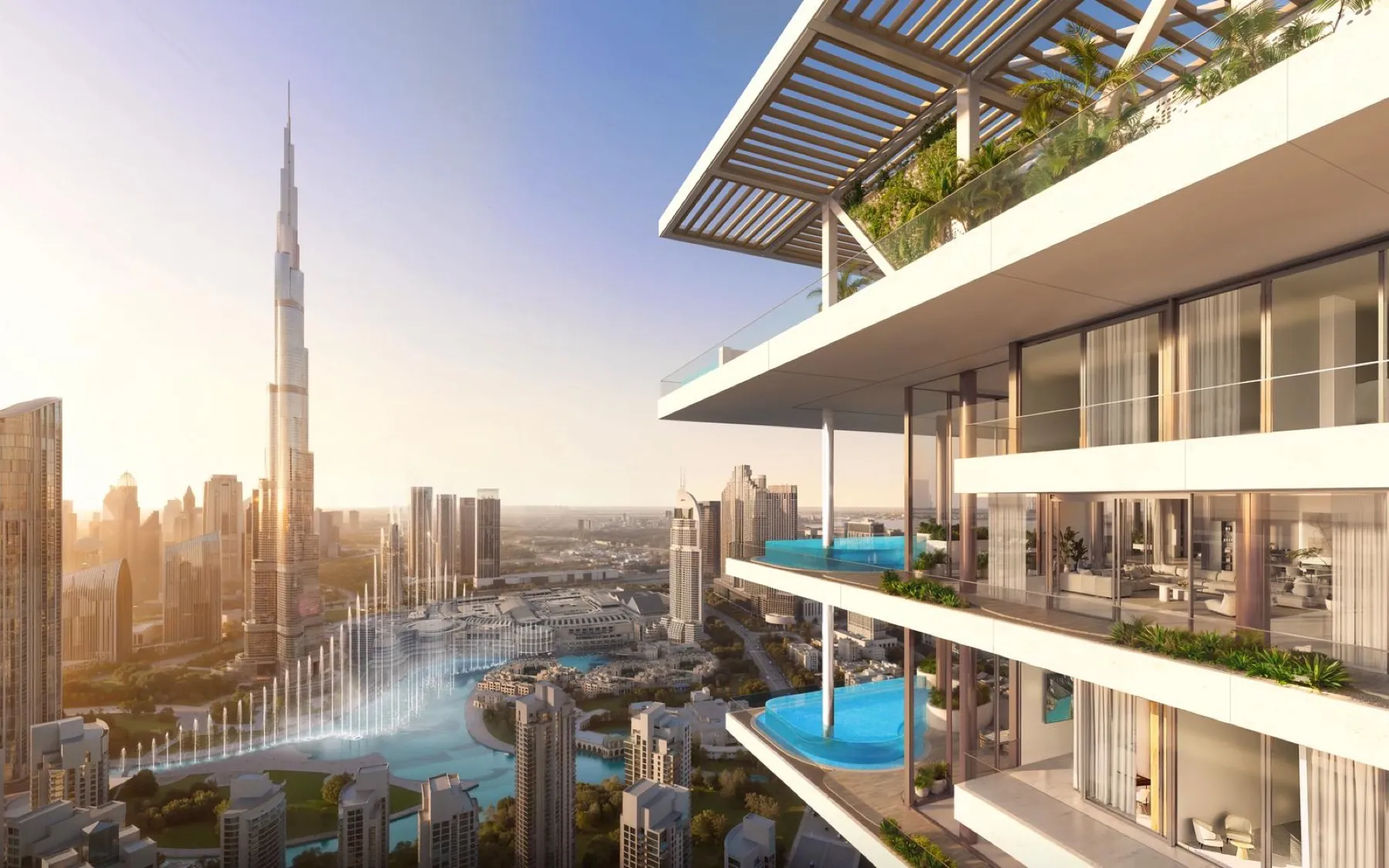
Downtown Dubai vs Business Bay: which one to choose by investor profile?
Burj Khalifa and Dubai Mall on one side, the canal and regional HQs on the other. Two neighbouring districts, two very different DNAs. Our detailed read for the right choice.
Market · 14 min read
Investing in Dubai in 2026: the complete guide for foreign investors
Why Dubai remains the most liquid market in the Middle East, how to buy as a non-resident, and our reading of the 2026 cycle.